

ACNE SCAR CORRECTION · ARNPRIOR + OTTAWA VALLEY
Acne Scar Treatments Near Ottawa
Acne can leave behind more than one type of concern—and each requires a different treatment approach.
Active breakouts, flat red or brown post-acne marks and indented textural scars are not the same thing. Your consultation begins by identifying what is actually present so we can treat concerns in the right order and avoid recommending a procedure that does not match the problem.
Is It Active Acne, a Post-Acne Mark or a True Scar?
Active Acne
What it looks like
Current breakouts, congestion, blackheads, inflamed blemishes or recurring acne.
What is happening
The acne process is still active. Beginning intensive scar correction while breakouts continue can lead to new marks and scars.
How we approach it
The first priority is controlling active acne and supporting healthier skin function. Your plan may include clinician-guided skincare, chemical peels, HydraFacial, Hollywood Spectra Acne Peel, Fotona acne treatment, Healite II or medical referral when appropriate.
Red or Brown Post-Acne Marks
What they look like
Flat areas of discoloration that remain after a blemish has healed. They may be red, pink, purple, tan or brown, but they do not create a depression or change in the skin’s surface.
What is happening
Red or pink marks may represent post-inflammatory erythema, which is associated with persistent vascular redness.
Brown marks may represent post-inflammatory hyperpigmentation, in which inflammation has stimulated excess melanin production.
These are changes in colour—not textural acne scars.
How we approach them
Persistent red post-acne marks may be treated with Derma V when vascular redness is the appropriate target.
Brown post-acne pigmentation may be addressed with pigment-regulating skincare, selected chemical peels, LaseMD Ultra, Hollywood Spectra or Derma V in carefully selected cases.
Treatment selection depends on skin tone, pigment depth, sensitivity, active inflammation and the risk of creating additional pigmentation.
Textural Acne Scars
What they look like
Indentations, depressions, uneven texture or areas where the surface of the skin has permanently changed.
Textural scars may include rolling, boxcar, ice-pick or mixed patterns.
What is happening
Collagen and structural tissue have been altered during the healing process. Treating colour alone will not rebuild an indentation.
How we approach them
Depending on the scar pattern, skin type and desired recovery time, a corrective plan may incorporate Genius RF microneedling, Mosaic 3D, SkinPen, erbium YAG or fractional CO₂ resurfacing.
Rolling, boxcar and ice-pick scars do not necessarily respond to the same procedure. Some tethered or very narrow scars may require focal treatments or referral for procedures that are not currently offered at Arnprior Med Spa.
Why the Correct Classification Matters
A vascular laser can improve appropriate red marks, but it cannot lift an indented scar. A resurfacing treatment may improve texture, but it may not be the first choice for active acne or isolated discolouration.
That is why your consultation does not begin by choosing a device.
We assess:
- Whether acne is still active
- Whether remaining marks are primarily red or brown
- Whether textural scars are present
- Which scar patterns are visible
- Your skin type and pigmentation risk
- Previous treatment response
- The amount of downtime you can manage
From there, we determine what should be treated first and whether your plan should focus on acne control, colour correction, collagen remodelling or a staged combination.
Treatments That May Be Used for Textural Acne Scars
No single device is best for every acne scar.
Your treatment may involve one technology or a planned sequence based on scar type, depth, skin tone, previous treatment response and acceptable downtime. Treatments are introduced only after active acne is sufficiently controlled.
Persistent Red and Brown Post-Acne Marks
Potential treatments: Derma V, Hollywood Spectra, LaseMD Ultra or SkinPen Microneedling
Flat red and brown marks are not true textural acne scars, although they may occur alongside scarring.
Persistent red or pink marks may have a vascular component and may be treated with Derma V when appropriate.
Brown post-inflammatory pigmentation may respond to a different plan involving pigment-regulating skincare, chemical peels, LaseMD Ultra, Hollywood Spectra laser toning or carefully selected Derma V treatment.
No laser is automatically appropriate for every complexion. Treatment selection depends on the colour being targeted, skin type, active inflammation and individual pigmentation risk.
Selected Rolling or Boxcar Scars, Uneven Texture
Treatment option: Genius RF Microneedling
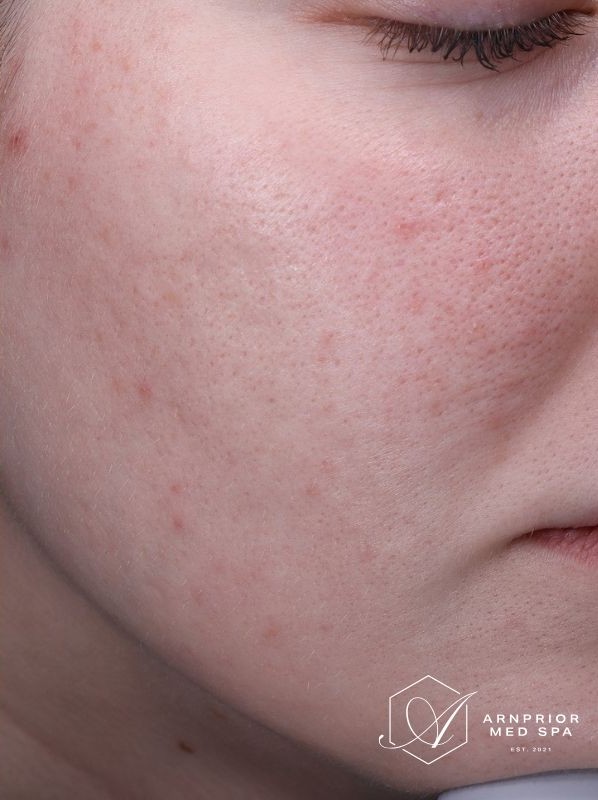
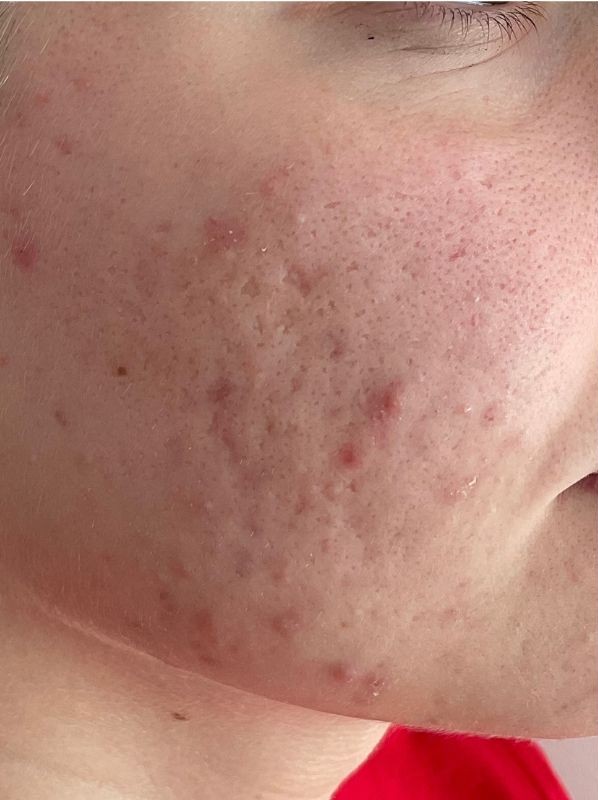 BeforeAfter
Textural acne scarring and enlarged pores following a treatment plan incorporating Genius RF microneedling and fractional CO₂ resurfacing. Individual results vary.
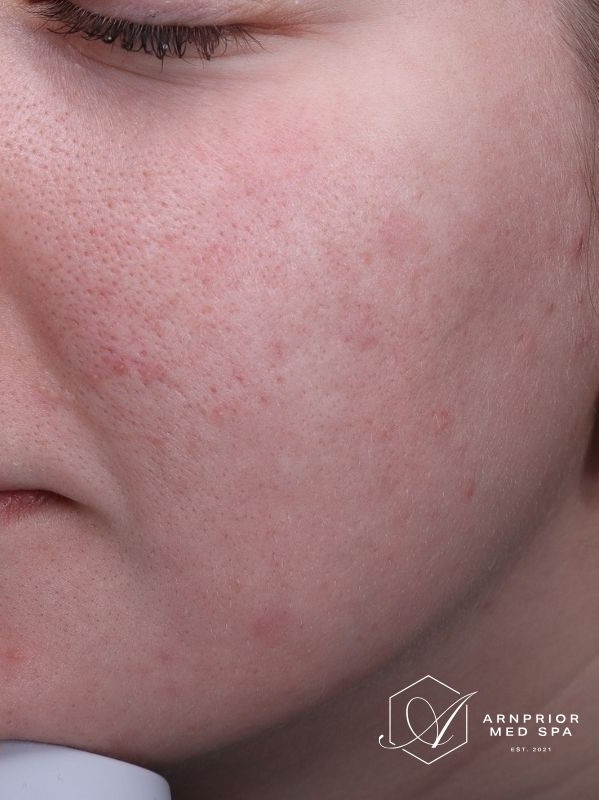
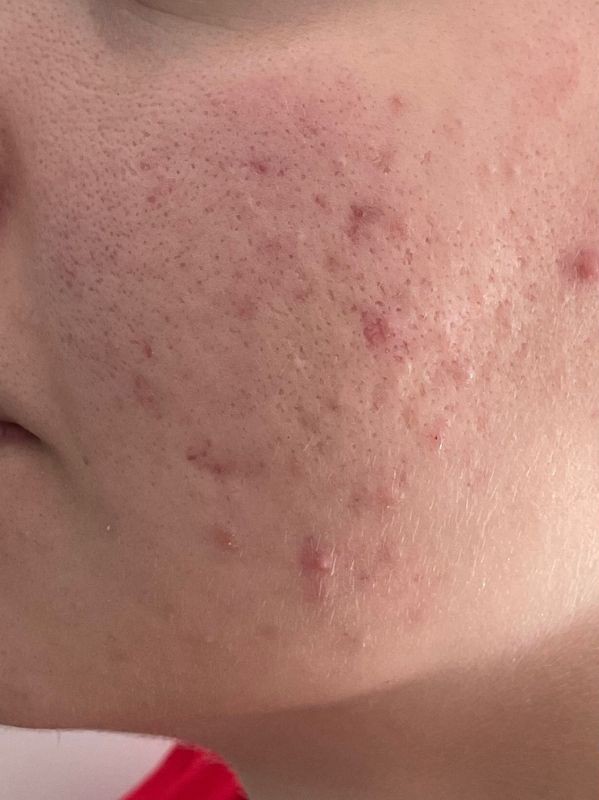 BeforeAfter
Textural acne scarring and enlarged pores following a treatment plan incorporating Genius RF microneedling and fractional CO₂ resurfacing. Individual results vary.
Drag any photo to compare
Genius RF microneedling delivers controlled radiofrequency energy beneath the skin’s surface through insulated microneedles. It supports collagen remodelling at customized depths and may be useful when textural scarring occurs alongside reduced firmness or enlarged pores.
It is not automatically the best treatment for every deep or narrow scar. Ice-pick scars and tethered rolling scars may require a different procedure or referral.
Fractional Resurfacing for Texture and Visible Pores
Treatment option: Mosaic 3D
Mosaic 3D is a 1550 nm non-ablative fractional laser that creates controlled treatment zones beneath the skin’s surface. It may be selected to support collagen remodelling and gradually improve the appearance of acne-scar texture without removing the entire skin surface.
A series is commonly recommended. Mosaic offers a different balance of treatment depth and recovery than ablative erbium YAG or fractional CO₂ resurfacing.
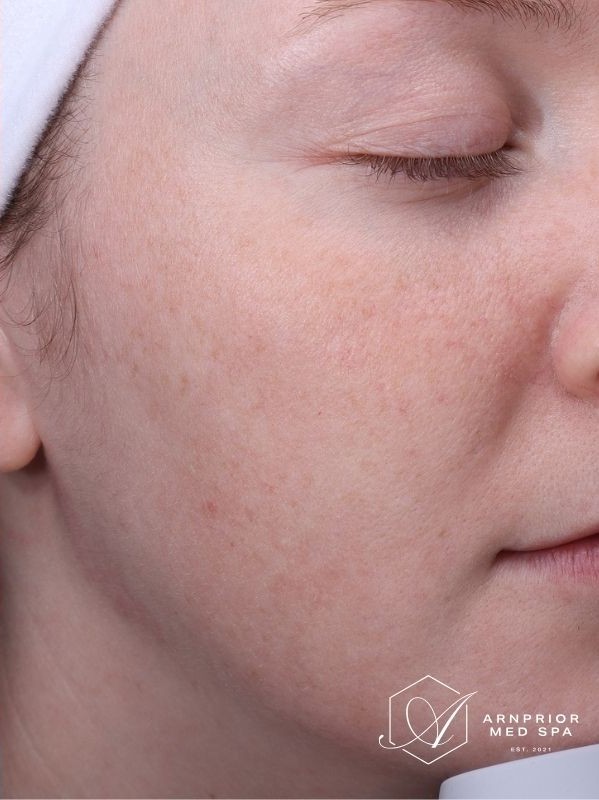
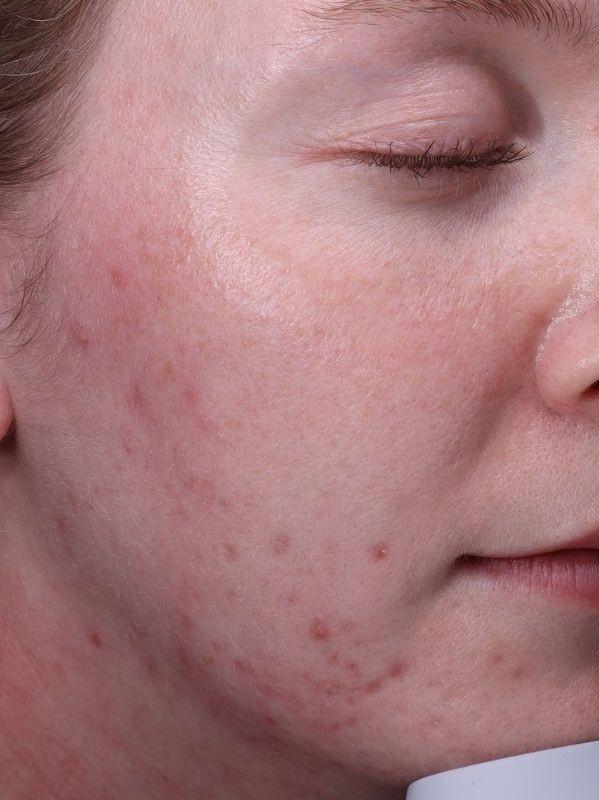 BeforeAfter
Acne scars before and after Fractional laser skin resurfacing
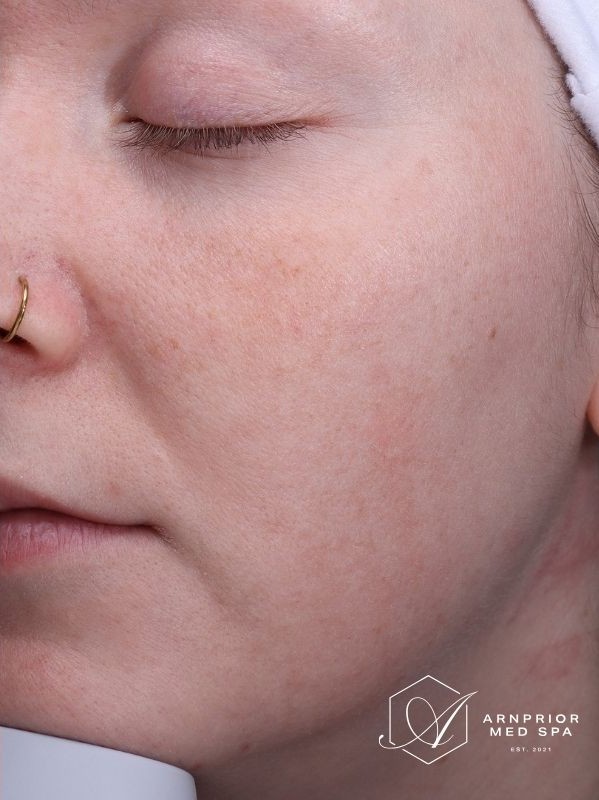
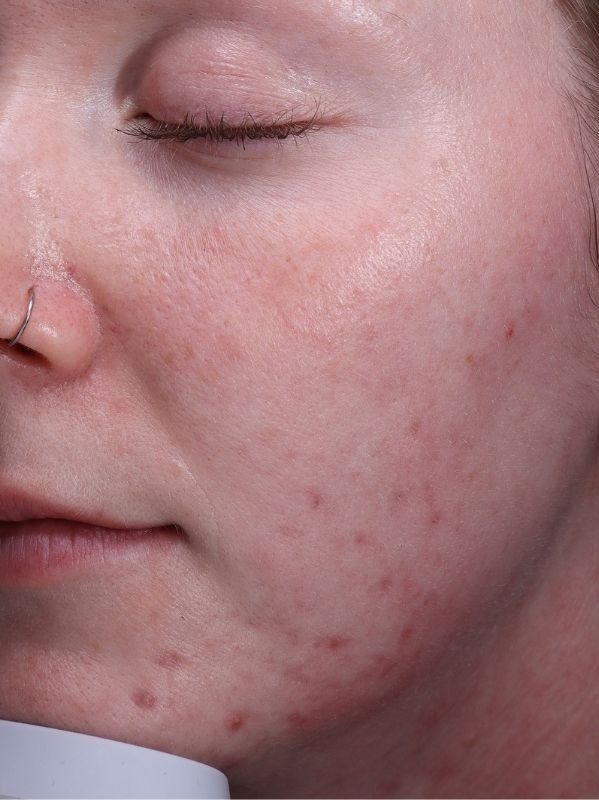 BeforeAfter
Acne scars before and after Fractional laser skin resurfacing
Drag any photo to compare
Advanced Resurfacing for More Pronounced Scarring
Treatment option: Er:YAG and Fractional CO₂ Resurfacing
Erbium YAG and fractional CO₂ provide more intensive surface renewal than non-ablative fractional treatments. Depending on the selected technology and settings, treatment may address both surface irregularity and deeper collagen remodelling.
Greater treatment intensity generally involves more recovery and does not guarantee that every scar will respond. Suitability depends on scar type, skin tone, pigmentation risk, previous healing and your ability to follow preparation and aftercare instructions.
What What You Can Expect From Our Acne Scar Approach saying…
Acne scars rarely fit neatly into one category. Our role is to identify what is present, explain what each treatment can realistically address and develop a structured plan around your skin—not around a single device.
Correct Classification
We distinguish active acne, red or brown post-acne marks and true textural scars before recommending treatment.
Treatment Matched to Scar Pattern
Rolling, boxcar and ice-pick scars may respond differently. Treatment is selected according to scar type, depth, skin tone and pigmentation risk.
Progress That Is Reassessed
Baseline photography or VISIA imaging may be used when appropriate. We allow time for healing and collagen remodelling before deciding whether to repeat, adjust or change treatment.
Honest Treatment Boundaries
No device can correct every scar. If your scar pattern may benefit from a procedure we do not offer, such as subcision, TCA CROSS or a surgical technique, we will explain that and recommend referral when appropriate.
ACNE SCAR TREATMENTS IN ARNPRIOR

Personalized Acne Scar Treatment Near Ottawa
Arnprior Med Spa provides consultation-led acne scar treatment for clients from Arnprior, Ottawa, Kanata, Renfrew and communities throughout the Ottawa Valley.
We distinguish active acne, red or brown post-acne marks and textural scars before recommending treatment. This allows us to build a plan around what is actually present rather than asking you to choose a laser or device yourself.
Located at 43 Madawaska Street in downtown Arnprior.
Frequently asked questions
NOT SURE WHETHER IT IS A MARK OR A SCAR?
Start With the Correct Classification—not a Device
You do not need to choose between Derma V, RF microneedling, Mosaic 3D or CO₂ before booking.
Your consultation is designed to distinguish active acne, post-acne colour and textural scarring, identify the scar patterns present and build a clear prepare–treat–reassess–maintain pathway around your skin and goals.
